
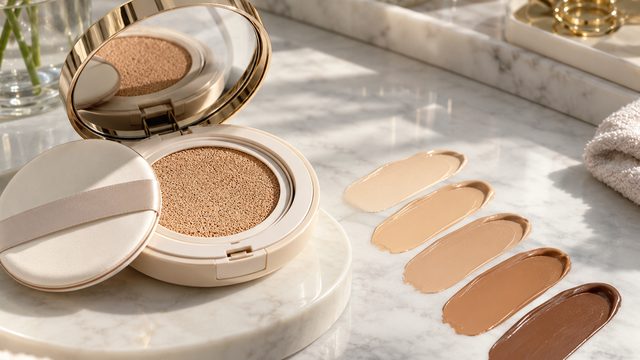
Shop for Korean cushion foundation and you’ll quickly run into names like 21N, 23W or 25N. The real question usually isn’t “What does 21 mean?” — it’s “I usually wear 21. Should I buy 21 in another brand too?”
If 21 usually works for you, starting around 21 in a new brand makes sense. Just don’t treat it as an exact conversion.
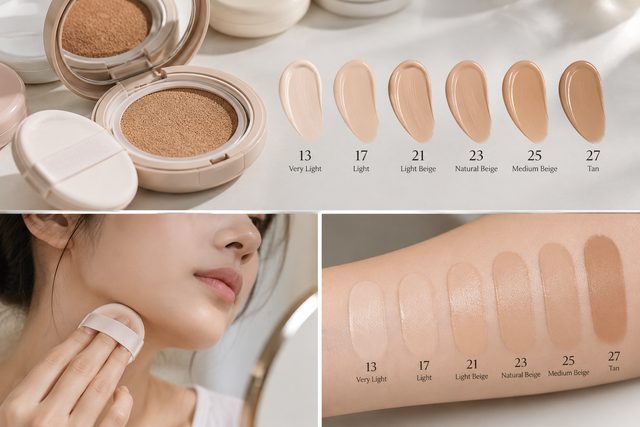
Numbers like 21, 23 and 25 give you a rough idea of shade depth: smaller numbers are generally lighter, larger ones deeper. But there’s no universal scale shared by every Korean beauty brand, so one brand’s 21N can look lighter, darker, pinker or more yellow than another’s.
21, 23 and 25 at a glance
| Shade | Often called | Roughly for |
|---|---|---|
| 21 | Light beige | Lighter skin |
| 23 | Natural beige | Light to medium skin |
| 25 | Medium or sand beige | Medium skin |
These are common naming patterns, not a rule — each brand names and mixes its shades a little differently. Colors are approximate and look different on every screen.
Shade ranges are also getting wider: some lines now include 13, 17, 19, 22, 27 and much deeper shades. If your skin is deeper than a 25, check how far a product’s range actually goes before you order — some Korean cushions still don’t go very deep.
Start with a foundation shade you already trust
If you own a foundation or cushion that matches you well, that product is more useful than simply saying “I’m a 21.” Say your current 21N blends naturally into your face and neck: in a new brand, start around 21N, then look for people who use the same reference shade. Reviews like these are the most useful:
- “I wear Brand A in 21N, but 23N works better for me in Brand B.”
- “This brand’s 21 runs a little lighter.”
- “It looked right at first, then settled slightly darker.”
They work because you’re not asking strangers to guess your skin — you’re comparing against a product you already know.
What do N, C and W mean?
| Letter | Undertone | What it usually means |
|---|---|---|
| N | Neutral | Between pink and yellow |
| C | Cool | Pink or rosy |
| W | Warm | Yellow or golden |
The number usually tells you about depth; the letter points to undertone. Brands don’t use these labels in exactly the same way, so two shades called 21N can still look noticeably different on skin.
What does “a good match” mean to you?
This matters more than it sounds. Some people want foundation to disappear into their neck. Others prefer a slightly brighter look. Some care most about covering redness or freckles without looking heavy.
So ask yourself first: do I want the most natural match, a slightly brighter finish, or stronger coverage? Two people with similar skin can choose different shades because they want different results.
Buying online? Look for someone with your reference shade
A review that only says “21N looks great” tells you little. The useful ones mention the shade the person wears in another foundation, whether their skin is fair, light, medium or deep, and whether they lean cool, warm, neutral or olive. Try searching like this:
- product name + 21N + your current foundation shade
- product name + fair neutral / medium warm / olive
That usually beats searching for the cushion number alone.
Reviews still aren’t a perfect answer
Even a detailed comparison only gets you closer. Oiliness, dryness, redness, texture, how much you apply and the formula’s finish all change how a color looks on your face.
Some cushions also look darker or warmer after they set — usually called oxidation.
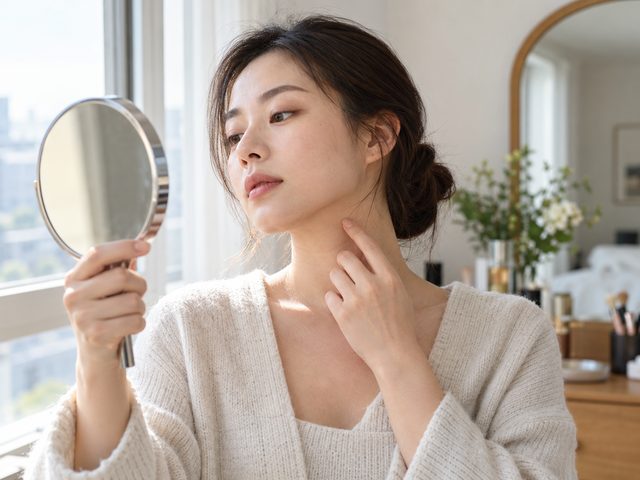
If you can test in person, swatch near your jawline and neck, not just on your hand. Wait a few minutes, then check in natural light. Large stores such as Olive Young have testers — see our Olive Young guide, and remember that purchases over ₩15,000 may qualify for a tax refund.
Quick questions
I’m between 21 and 23. Which should I pick? It depends on your goal: many people pick the lighter one for a brighter look and the deeper one for a closer neck match. If you can, test both on your jawline.
Is a cushion shade the same as the brand’s liquid foundation? Not always. Even within one brand, cushions and foundations can use different formulas, so check each product’s shade on its own.
What does “darkening” mean in Korean reviews? It’s the Korean shorthand (다크닝) for oxidation — the shade looking deeper after it sets on skin.
Start with the shade you already know → compare people with similar reference shades → check undertone and real-life reviews → test on your own face whenever possible.
That’s what 21, 23 and 25 are really for: not giving you the answer, but helping you narrow the search.