
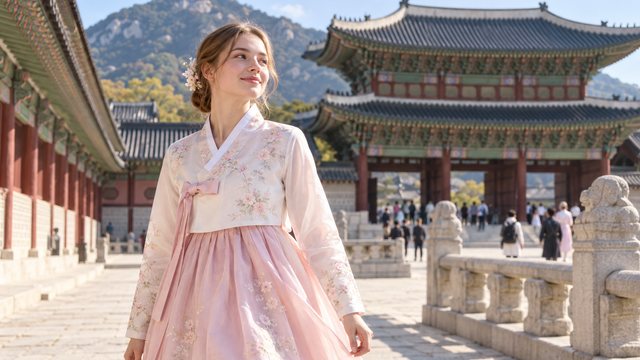
Traveling solo in Seoul and thinking about renting a hanbok for Gyeongbokgung? You can absolutely do it on your own.
Renting the outfit is the easy part. The question that usually comes next is more practical: who is going to take the photos?
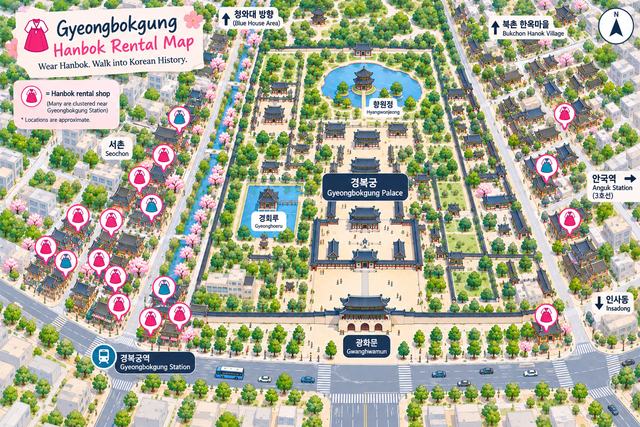
Neither part needs to be complicated. There are plenty of hanbok rental shops around Gyeongbokgung Station, and you can choose an outfit, change, walk the palace and come away with good photos even if you came to Seoul alone.
You don't have to pick a shop before you arrive
Walk from Gyeongbokgung Station toward the palace and you will pass a lot of rental options. You do not need to lock one in before your trip.
Search Naver Map or Google Maps for Gyeongbokgung hanbok rental, then compare location and rental conditions.
Some shops take walk-ins. On weekends and public holidays, booking ahead can save you a wait.
Look past the headline price. Check the rental time, whether hairstyling is included, which accessories cost extra, and whether you can leave your bag there. Travelling alone with a day bag, luggage storage matters more than you would expect.
Wearing hanbok gets you into Gyeongbokgung for free
There is a practical bonus to dressing up. Gyeongbokgung gives free admission to visitors wearing hanbok that meets the official guidelines.
Both traditional and modernized hanbok can qualify. The basic rule is that you need both an upper garment and a lower garment — a jeogori with a skirt or trousers. Simply throwing an overcoat (durumagi) over your own clothes is not recognized as hanbok.
Half-and-half combinations do not count either: a jeogori with jeans, or a hanbok skirt with a t-shirt, will not get you in free.
Guidelines can change, so check the official Gyeongbokgung page before you go.
Going alone? Here is how to get the photos
A small phone stand helps. Keep it out of walkways and follow the palace's photography rules on the day.
No stand? Ask another traveler, or someone who does not look rushed. A short “Could you take a photo for me?” is enough.
Then check the photo before you walk away. Maybe your shoes got cut off. Maybe the roof fell out of the frame. Maybe someone crossed behind you at the wrong moment.
If it is not the photo you wanted, say thank you, move on, and ask someone else somewhere better. You do not need to turn one stranger into your personal photographer.
Four photo spots we would start with
Gyeongbokgung is much larger than it looks from the front gate. If the main courtyard is packed, keep walking — the mood changes quickly once you get deeper in.
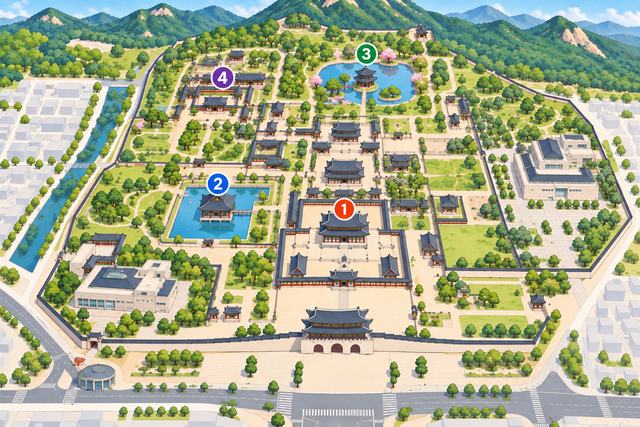
1. Geunjeongjeon — the classic “I'm at Gyeongbokgung” shot
The wide stone courtyard, the rank stones and the big throne hall behind them give you a strong palace backdrop without any clever composition.
It is also one of the busiest spots. If the centre is crowded, step to one side instead of waiting forever for an empty frame.
How to spot it: a huge two-tiered hall raised above a broad stone courtyard.
2. Gyeonghoeru — water, reflections and a wider frame
The pavilion stands on stone pillars over a pond, so step back and let the water into the picture. A wider composition works better here than filling the frame with the building.
How to spot it: a large two-storey pavilion on stone columns above a broad pond.
3. Hyangwonjeong — softer and more garden-like
If you want something calmer than a giant courtyard, head north. The small pavilion, the pond and the trees around it soften the photo, and the scenery changes a lot with the season.
Try including more of the pond rather than zooming in on the pavilion alone.
How to spot it: a small hexagonal pavilion on an island in the middle of a pond.
4. Taewonjeon — go deeper when the front feels too busy
If the main halls are crowded, keep walking toward Taewonjeon in the northwest corner. It is one of the quieter parts of the palace and an easy way to get people out of your background.
Unlike Gyeonghoeru or Hyangwonjeong, it is easier to think of Taewonjeon as a compound of halls and courtyards rather than one instantly recognizable landmark.
How to spot it: follow the palace map and the on-site signs for Taewonjeon; once you are in the area you will see several halls and courtyards grouped together.
And do not ignore the spaces between the famous buildings. A quiet wall, a doorway, or a long corridor can give you a better solo photo than the spot everyone else is queuing for.
You don't need to wear hanbok all day
Give yourself extra time to choose the outfit, change and take photos, but you do not have to build the whole day around it. A few hours is enough for a relaxed walk through Gyeongbokgung and plenty of photos.
Dress for the weather underneath and pick comfortable shoes. In a full skirt they barely show in most photos anyway — and your feet will thank you later.
Going solo is not a reason to skip it
Walking out of the rental shop in hanbok may feel a little awkward for the first minute. Then you reach the palace and see other visitors dressed up too, and it passes quickly.
Pick the hanbok you actually like. Walk at your own pace. Stop when you find a background you love.
You did not come all the way to Seoul to skip something you wanted to try just because nobody came with you. Solo trip, solo rules.