
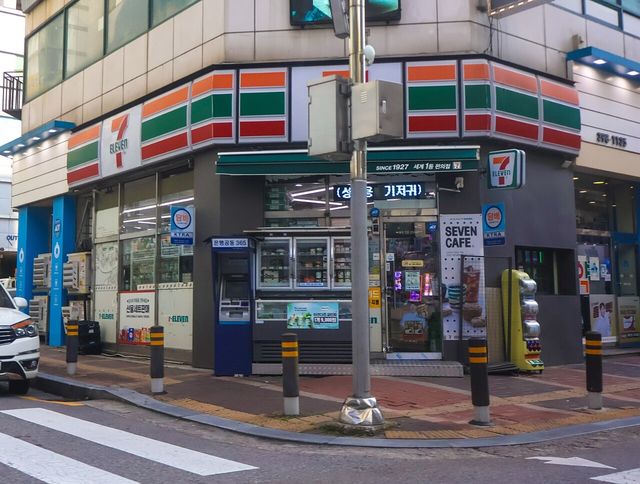
Convenience stores are hardly unique to Korea. What feels different is how travelers end up using them: 1+1 deals, T-money top-ups, free hot water for cup ramen, eating in the store, and the question of whether there is a restroom.
It’s more than a snack shop
Forgot a toothbrush? Need an umbrella, wet wipes or paper cups? A Korean convenience store can often save you a trip to a bigger shop. Along with food and drinks, many stores carry tissues, basic toiletries, razors, sanitary products, umbrellas and other everyday essentials — especially handy late at night.
You are paying for convenience, not the lowest price. Household items can cost more than at a supermarket or discount store.
Hungry? Keep your first meal simple
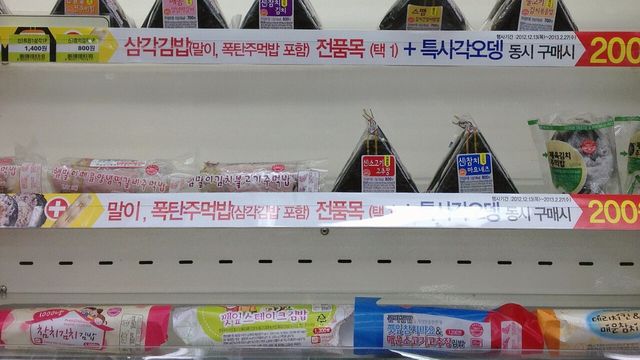
You will find lunchboxes, gimbap, triangle gimbap, cup ramen, microwave rice, soups and stews, tteokbokki, chicken, sausages and hot-bar snacks. You don’t need an elaborate “viral convenience-store meal” — one or two items are usually enough.
- Triangle gimbap + cup ramen — the classic, hard-to-get-wrong combination. Add a small pack of kimchi or pickled radish if you like.
- Microwave rice + soup or stew — closer to a warm Korean rice meal.
- Lunchbox + drink — rice and side dishes are already packed together.
- Tteokbokki + boiled egg — the egg makes spicy tteokbokki a little easier.
- Chicken or hot-bar snack + drink — when you’re hungry but don’t want a full meal.
- Gimbap + drink — gimbap is already a fairly complete meal.
There are also plenty of chips, chocolate, bread, desserts and ice cream. Korean staples such as banana milk and Melona are easy to spot.
Can you use the microwave and hot water?
Many stores have microwaves for lunchboxes, microwave rice and chilled ready meals. Hot water for cup ramen bought in the store is also commonly available. Some branches go further with instant-ramen cooking machines or a small seating area, but those facilities aren’t everywhere.
Bottled water costs money. Hot water for cup ramen doesn’t. Restaurants usually serve water free with a meal; in a convenience store, bottled water is merchandise.
What do 1+1 and 2+1 mean?
You will see these labels on drinks, ice cream, snacks, sausages and more. 1+1 means buy one and get another promotional unit free. 2+1 means you pay for two and get three.
A promotion isn’t automatically the best buy. If something you already want is on offer, great — but don’t buy extras just because of the label. Promotions vary by chain, branch and date, so check the shelf tag.
You can buy or top up a T-money card here
Many convenience stores sell and top up T-money prepaid transit cards — useful when you’re nowhere near a subway station and your balance is running low.
One detail catches visitors out: for a regular prepaid T-money card, purchases and top-ups at convenience stores or subway stations require Korean won in cash. Foreign-issued credit cards are not accepted for this. Korea is card-friendly, but keep a little cash — our guide to paying in Korea explains the other transit options.
The lunchbox or chicken you want may be sold out
Lunchboxes, gimbap and prepared chicken don’t sit on the shelf forever. Popular items can be gone later in the day, or a branch may simply be waiting for its next delivery. An empty shelf doesn’t mean anything is wrong with the store.
Eating inside? Clean up after yourself
A convenience-store seating area doesn’t work like a restaurant. If you eat ramen or a lunchbox there, throw away your containers, cups and packaging and leave the table tidy. Some stores have a separate place for leftover soup — follow the signs.
Do Korean convenience stores have restrooms?
Usually, don’t count on it. Many small convenience stores have no restroom for customers. If the store is inside a mall, office building or highway rest area, you normally use the building’s shared restroom.
사용할 수 있는 화장실이 있을까요? — Sayonghal su inneun hwajangsiri isseulkkayo? — “Is there a restroom I can use?”
Even when the store has no customer restroom, staff may point you to one nearby.
Are they open 24 hours?
Not always. Many stay open very late or around the clock, but hours depend on the branch. Some close overnight, and some switch to unmanned operation for certain hours. If you need a store very late or very early, check the branch on a map app first.
K-pop or character fan? Check the promo displays
Chains regularly run collaborations with idol groups, characters and brands — limited packaging, photo cards, random goods or other bonus items. They aren’t at every branch, but stumbling on one is part of the fun.
The short version
- Check 1+1 and 2+1 shelf labels before paying.
- Buy bottled water; hot water for cup ramen bought there is free.
- Keep some Korean won cash for regular T-money purchases and top-ups.
- Don’t assume a small store has a customer restroom.
- If you eat inside, clean up after yourself.
- Check opening hours if you’re going very late or very early.
Opening hours, facilities, promotions, stock and collaboration goods vary by branch and date. Follow the signs at the store you visit.