
Everyday Korean expressions, explained
Short words that carry a lot of culture. Each guide shows what an expression really means, who says it to whom, example sentences you can listen to, how to pronounce it, and the small mistakes learners make.
Start with 오빠 or 괜찮아 if you watch K-dramas — they are the two words fans ask about most.
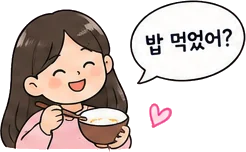 Bap meogeosseo?
It can be more than a meal question — sometimes it is a warm way to check in on someone.
Read the guide →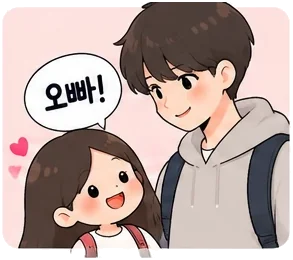 Oppa
OppaA woman may use it for an older brother — and also for an older male she is close to. Context changes the feeling.
Read the guide →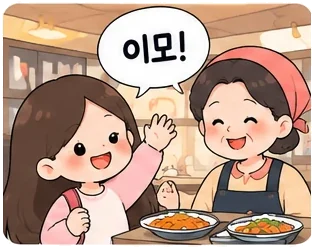 Imo
ImoLiterally your mother’s sister, but in some everyday settings Koreans also use 이모 for a familiar middle-aged woman.
Read the guide →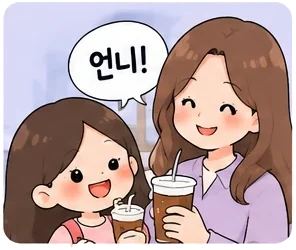 Eonni
EonniA woman uses 언니 for an older sister, but it can also be a friendly way to address an older woman she is close to.
Read the guide →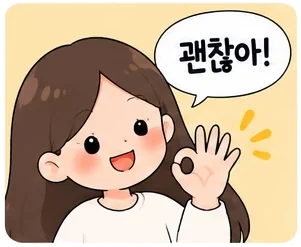 Gwaenchana
Depending on the moment, 괜찮아 can mean ‘I’m okay,’ ‘that’s fine,’ ‘don’t worry,’ or even ‘no thanks.’
Read the guide → Uri
UriKoreans often say 우리 집 or 우리 엄마 — ‘our home’ and ‘our mom’ — even when English would naturally use ‘my’.
Read the guide →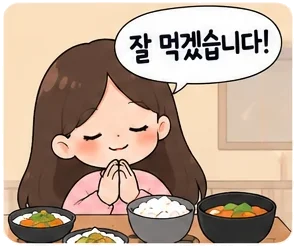 Jal meokgetseumnida
Said before eating, especially when someone prepared or provided the meal. It carries appreciation as well as anticipation.
Read the guide →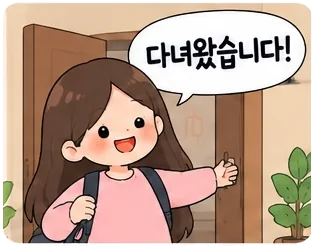 Danyeowatseumnida
A polite expression said when returning. You may also hear 다녀왔어요 or the casual 다녀왔어, depending on the relationship.
Read the guide →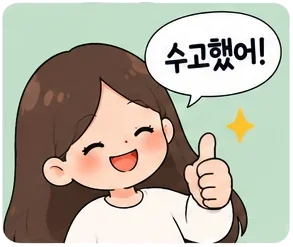 Sugohaesseo
A warm phrase for recognizing someone’s effort after work, practice, a trip, or simply a tiring day.
Read the guide →